by Li Yan
Share
by Li Yan
Share
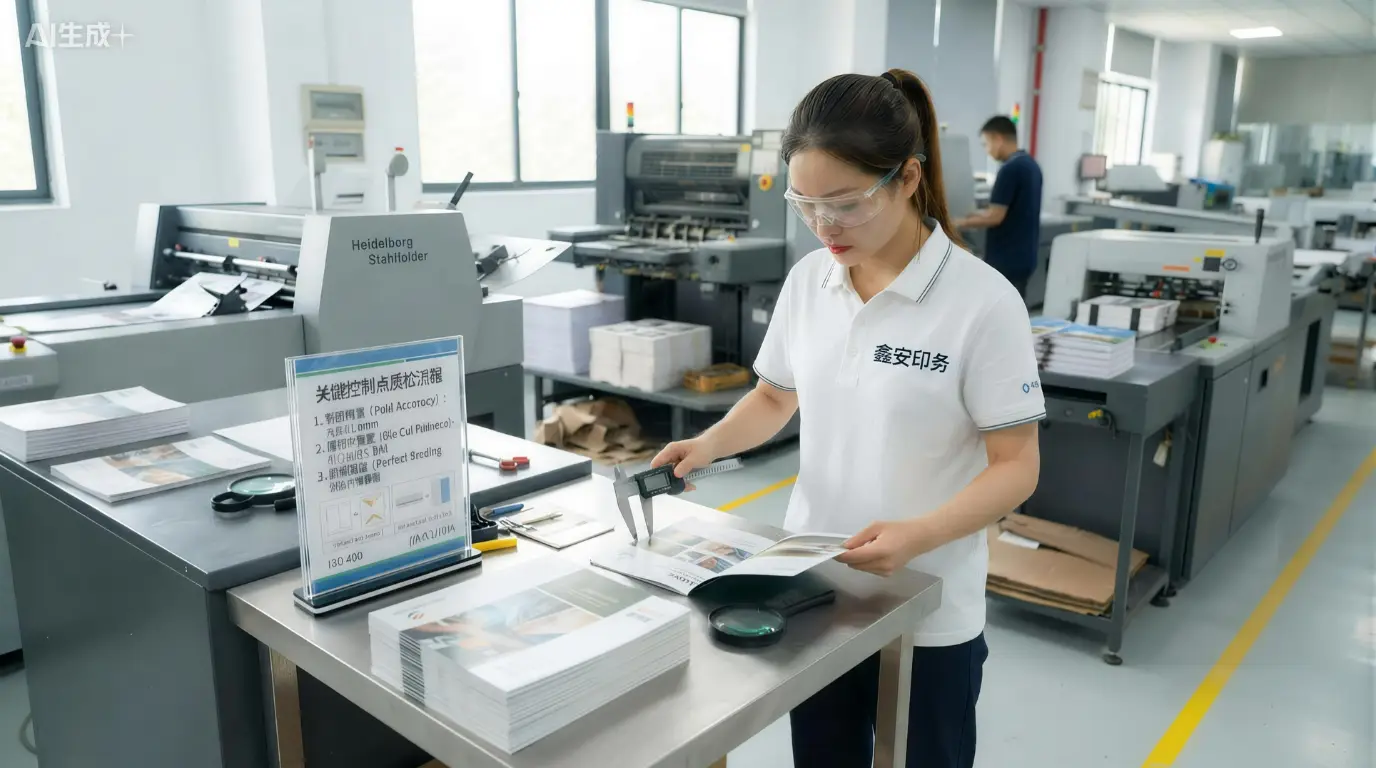
In printing, the effectiveness of process control directly determines the rate of acceptable output. We are backed by a well-trained and experienced team of on-floor quality personnel – the “eyes” and “brain” of our production line. Through rigorous patrol inspections, diligent recording, and prompt intervention, they ensure that every operation remains within control and that full batch traceability is achieved. We call this system the “human-centric closed-loop monitoring system”.
The Three-Tier Inspection Regime: First-Off, Patrol, and Last-Off
We strictly enforce a “first-off mandatory inspection, in-process patrol inspection, and last-off re-inspection” system, distributing quality control across every section:
Whenever a production condition changes, quality personnel immediately perform a comprehensive check on the first piece – including size, colour, die-cut registration, binding strength, etc. – and sign it off. Mass production proceeds only after the first-off is approved, effectively preventing large-scale waste.
Quality personnel make regular rounds to each machine (e.g., every 30 minutes) while also conducting unscheduled spot checks based on equipment status and material batch variations. Inspections cover not only product metrics but also whether operating parameters (such as printing pressure, folding pressure, and glue temperature) are within standard ranges – a “people-machine-material” triple check.
At the end of the production run, we sample and re-inspect again to confirm that the entire batch maintained consistency despite potential equipment fatigue or residual material variations, providing a reference point for the next job.
Pre-defined Critical Control Points (CCPs)
Based on years of process experience, we designate several Critical Control Points along each production line, where quality personnel are stationed for focused checks:
Printing
Spot checks for colour difference, register, hickeys, scratches, and record solid density and dot gain.
Folding
Check crease position, signature neatness, and page sequence (for multi-panel folds).
Die-Cutting
Inspect cut smoothness, cut-out position, and waste strip separation.
Binding
Test spine glue thickness, pull strength (using manual or simple tension gauges), cover squareness, and page-turn smoothness.
Each CCP is supported by standard operating procedures and defect picture libraries to ensure objective, standardised judgement and minimise subjective variation.
Manual Recording and Batch Files – The Core Carriers of Traceability
Although we lack automated data collection, we have established a meticulous paper-digital dual-track record system:
Quality Tracking Card
Every inspection result from each process is recorded in real time on a Quality Tracking Card, which includes: time, machine number, product batch, inspection items, measured values, judgment, and operator signature.
Digital Batch Archive
At the end of each shift, quality personnel enter the tracking card data into an electronic spreadsheet (Excel), forming a digital batch archive. This archive is linked to the customer order number and material batch number, allowing retrieval of the entire historical inspection data for that batch at any time.
Corrective Action Record
For any abnormality, we maintain a separate Corrective Action Record, detailing the problem description, root cause analysis, corrective measures taken, and subsequent re-verification results, ensuring every deviation is fully closed.
Abnormality Response and Immediate Intervention – The Speed Advantage of Human Action
This flat-hierarchy rapid response is often more direct than automated alarms followed by human verification.
For instance, if a folding misalignment is observed, the quality staff can guide the operator to adjust the side guides or conveyor belts and monitor the next 20 consecutive sheets to confirm stability before resuming production – the entire process often takes less than five minutes, minimising losses.
Driving Continuous Improvement with Data
Each month, we aggregate all quality tracking cards and abnormality records. The quality team performs statistical analysis to identify recurring defects and their associated process stages, then revises process standards, adjusts patrol frequencies, or refines operator training content accordingly.
This “human-plus-statistics” improvement approach, though lacking real-time dashboards, is deeply rooted in the shop floor, highly pragmatic, and cultivates a technically proficient quality workforce that is observant and decisive.
Closing Remark
We firmly believe that the best monitoring system is not a collection of cold sensors, but responsible, experienced, and committed quality people on the floor. With their eyes, hands, and dedication, they weave a safety net that covers the entire process, turning “every step is under our control” from a slogan into a living practice.
STAY IN THE LOOP
Subscribe to our free newsletter.
Leave A Comment

Even the most accurate colour reproduction becomes meaningless if the [...]